It has been 215 days or approximately 5,161 hours since this blog was lastly updated. 'Blog momentarily on Hiatus', although two-hundred fifteen days are quite a lot of time to turn hiatus to dead.
I hope the members here have done some sort of art, be it music, film, paintings, drawing, sculpture, animation, meditation, during this pause. I know I have. As an attempt to bring life back to this blog with a gentle CPR, I decided to post a link of another blog which is absolutely a wonderful source of inspiration. A must-check, a must-bookmark page.
Living Lines Library
With hopes you find this useful, I encourage you to post your work again and get things back to life. Remember that a vital life vitalizes.
Peace.
Luca

Showing posts with label Animation. Show all posts
Showing posts with label Animation. Show all posts
Friday, 6 January 2012


Friday, 22 April 2011
Epipheo
So this semester, the HND1's Animation students got a challenging title for their animation. They will need to animate the evolution of MCAST Art & Design in under one minute. Most students are tackling it either in the form of an animated infographic, others are displaying it in the form of a fictional narrative. Either way, I would suggest to these students to have a look at 'Epipheo''s videos on youtube. Even though their videos are animated, they are largely showing statistics & information throughout a narrative and of course trying to sell whatever they have been hired for, in a fun way.
For most people when they think about animation, they think about big budget 3D films, and not necessarily animating for online marketing. I urge students who are inclined towards animation to consider this option; it could be a nice change to the quality of our local adverts.
This is from Epipheo's website: (and visit the website as well, it's as interesting as their videos)
"We are, like, the Crack Commando A-Team of the marketing world. Large and small companies call us when billboards, websites and typical videos don't work. We get hired when organizations want conversion—you know, when you actually want to change someone's mind about a product, solution or cause. We will do whatever it takes to communicate YOUR idea to the world."
For most people when they think about animation, they think about big budget 3D films, and not necessarily animating for online marketing. I urge students who are inclined towards animation to consider this option; it could be a nice change to the quality of our local adverts.
This is from Epipheo's website: (and visit the website as well, it's as interesting as their videos)
"We are, like, the Crack Commando A-Team of the marketing world. Large and small companies call us when billboards, websites and typical videos don't work. We get hired when organizations want conversion—you know, when you actually want to change someone's mind about a product, solution or cause. We will do whatever it takes to communicate YOUR idea to the world."
Wednesday, 2 March 2011
What I'm doing
What I'm doing: Combining traditional and digital. Trying to take the best of both worlds :)
Tuesday, 29 June 2010
Artistic Book Review no.1
Welcome to my very first artistic book review and as I am quite a book nerd, I thought I might just uncover some books that will help in the artistic factor. I will be reviewing one book each 3-4 weeks (or try to) that can be helpful in artistic development whether it is art, design or both. There are several reasons why this is being written, however main purposes of this reviews and the ones to come are the following:
Tip: Books are there to help you out and not to do your work, so do not just stick to just reading and do not plagarize. Gather information, process it and sketch it out. Knowledge is power but is only 1/10th of the work needed to be done; one learned technique, process or fact can drive your project from a mere pass to a flying distinction if you experiment enough.
So, what's my first book?
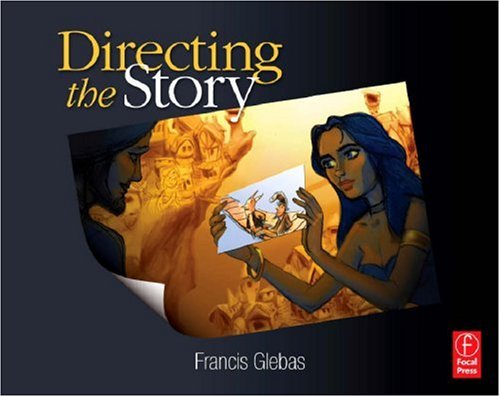
"Directing the Story: Professional Storytelling and Storyboarding Techniques for Live Action and Animation" by Francis Glebas
Personal Experience: When I saw the cover of this book I just knew it had to be on my shelf; a well designed cover of a book can tell you if it's platinum, gold, copper or charcoal quality. When I read this book it was even better, I literally felt like I have just found a diamond. This book is an eye-opener, a major motivator and a classroom in 346 pages. The structure of the book is beautiful and even if you're not really fond of reading, this will keep you hooked all the way. It is mainly targeted to illustrators that are interested in pursuing the career of animated film-making, however I found out that this book also applies for cartoonists that wish to plan out a long-series comicbooks story, just because the techniques offered help out that much.
In a nutshell: This book concerns about what it says on its cover; the storytelling part and whatever it involves with it. Just to let you know, this is not a book that will tell you how do the actual animation, only the pre-stages. Some might (including our dear lecturers) say that the editing part of the movie is the most crucial of all. Such a fact is true, however this book turns this theory upside down as it might not always be the case for animation or so the author says. Glebas begins with the common question of "why do we watch movies?". From that he builds up a step-by-step lesson of your life on how to script, beat box and storyboard your story...in preparation of making the actual animation of course.
- The college library might not have in offer yet, therefore people won't know about them. Hopefully with these reviews, they will become available.
- Topics offered under a different author and/or book. Books differ from one another of the same topics; if you can't find the information in what's available already, the reviews are here to give you yet another option consideration.
- Some of them may still be brand new and out of the printing press. Poor things need some proper lighting!
- Some people sometimes need eye-openers; so many titles to choose from that they really don't know where to go or what to choose. In a few words, trying to dodge or avoid confusion.
- Internet is overrated, big time. It can be as powerful as a book, however most of the times it is misinformative and/or misleading so do not rely on it too much for research.
Tip: Books are there to help you out and not to do your work, so do not just stick to just reading and do not plagarize. Gather information, process it and sketch it out. Knowledge is power but is only 1/10th of the work needed to be done; one learned technique, process or fact can drive your project from a mere pass to a flying distinction if you experiment enough.
So, what's my first book?
"Directing the Story: Professional Storytelling and Storyboarding Techniques for Live Action and Animation" by Francis Glebas
Personal Experience: When I saw the cover of this book I just knew it had to be on my shelf; a well designed cover of a book can tell you if it's platinum, gold, copper or charcoal quality. When I read this book it was even better, I literally felt like I have just found a diamond. This book is an eye-opener, a major motivator and a classroom in 346 pages. The structure of the book is beautiful and even if you're not really fond of reading, this will keep you hooked all the way. It is mainly targeted to illustrators that are interested in pursuing the career of animated film-making, however I found out that this book also applies for cartoonists that wish to plan out a long-series comicbooks story, just because the techniques offered help out that much.
In a nutshell: This book concerns about what it says on its cover; the storytelling part and whatever it involves with it. Just to let you know, this is not a book that will tell you how do the actual animation, only the pre-stages. Some might (including our dear lecturers) say that the editing part of the movie is the most crucial of all. Such a fact is true, however this book turns this theory upside down as it might not always be the case for animation or so the author says. Glebas begins with the common question of "why do we watch movies?". From that he builds up a step-by-step lesson of your life on how to script, beat box and storyboard your story...in preparation of making the actual animation of course.
That is not all; the book also go into extensive detail on several things such as how to build a good story, how to make interesting character designs, interaction within the characters and with the story itself and much, much more. Throughout the whole book there is also a continuous storyboard example flowing of a modified version of "1001 Arabian Nights", with the character Scheherezade playing as the main character. By following (and not just reading) this book makes you realize that the initial stages are just as important as the final assortments, re-organisation and touches, such as editing and special effects. Wonderfully written book, accompanied with a well-fitting page design, illustrations are at a generous abundance, vivid examples and personal suggestions, tips and hints from the author's personal life experiences in the career. Needless to say, this book is a must-have for animators and cartoonists alike, excellent starter for amateurs.
About the Author: Francis Glebas is a storyboard artist, teacher, director and writer. It can safely be said that Glebas has spent most of his life with the Disney Animation Studios. He has storyboarded animations that most probably built our childhood which are the following titles: Aladdin, Pocahontas, Hunchback of Notre Dame, Fantasia 2000 and Hercules. Other films that he has storyboarded are Dinosaur, Treasure Planet and Fox and the Hound 2.
About the Author: Francis Glebas is a storyboard artist, teacher, director and writer. It can safely be said that Glebas has spent most of his life with the Disney Animation Studios. He has storyboarded animations that most probably built our childhood which are the following titles: Aladdin, Pocahontas, Hunchback of Notre Dame, Fantasia 2000 and Hercules. Other films that he has storyboarded are Dinosaur, Treasure Planet and Fox and the Hound 2.
Wednesday, 9 June 2010
Short film: Khoda. "What if you watch a film and whenever you pause it, you face a painting?"
What if you watch a film and whenever you pause it, you face a painting?
This idea inspired Reza Dolatabadi to make Khoda. Over 6000 paintings were painstakingly produced during two years to create a five minutes film that would meet high personal standards. Khoda is a psychological thriller; a student project which was seen as a ‘mission impossible’ by many people but eventually proved possible!
Credits:
Director and art director: Reza Dolatabadi
Written by Reza Dolatabadi & Mark Szalos Farkas
Animation by Adam Thomson
Music by Hamed Mafakheri
- Winner of the Best Animation Canary Wharf Film Festival (London) Aug, 2008
- Winner of the Best Student Animation Flip Festival (Birmingham) 2008
- Winner of the Best Student Animation, Royal Television Society Award, Scotland (rts) 2009
- Official selection for the "Best Short Film Program” at Waterford Film Festival (Ireland) November 2008
_______________
Links
Reza Dolatabadi - RezaArt.com
Adam Thomson - adamthomsonanimation.com
Subscribe to:
Posts (Atom)
Subscribe To Electronic Sketchbook


 Posts
All Comments
Posts
All Comments